
How to Evaluate Vacant Land in Texas Before You Make an Offer
A buyer-focused due-diligence framework for confirming parcel identity, access, title, restrictions, utilities, flood information, surveys, and closing terms.
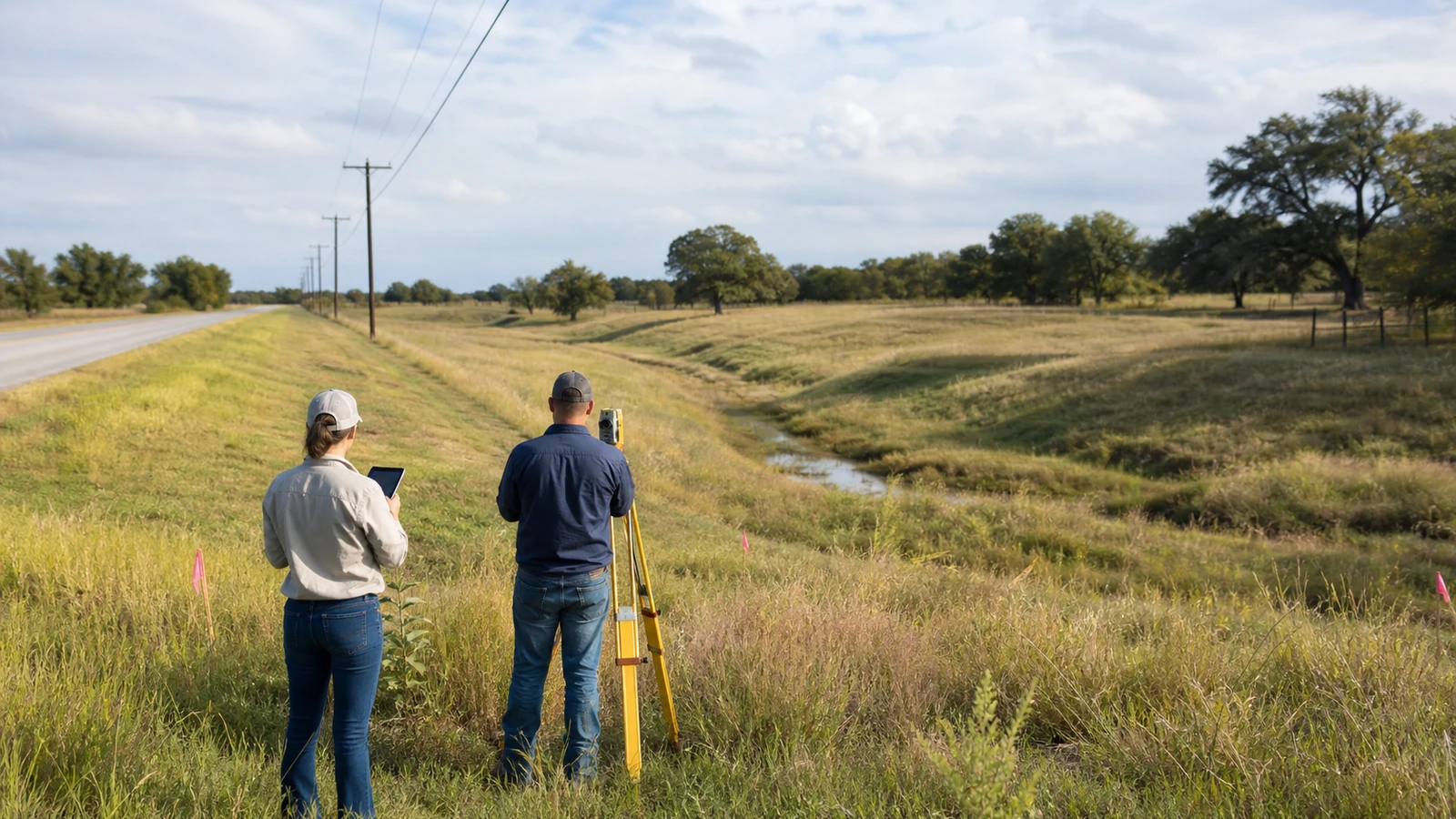
Vacant land can be visually simple and legally complex. A cleared lot beside a road may still have access restrictions, utility costs, flood exposure, setback limits, or title exceptions that affect its value. A wooded tract may be suitable for a buyer’s plan, but only after the buyer confirms the parcel boundaries, permitted use, and cost of site improvements.
Due diligence is the period for replacing assumptions with documents and professional opinions. The right investigation depends on the property and intended use, but the following framework gives Texas land buyers a disciplined place to start.
Confirm the Parcel You Are Evaluating
Match the advertised property ID, tax account number, legal description, map location, and acreage. Do not rely only on a street address or a pin placed on an online map. County appraisal maps are useful research tools, but they are not boundary surveys.
Visit the property when possible. Compare visible roads, fences, structures, drainage, and neighboring uses with the available records. If the parcel cannot be confidently identified on the ground, resolve that issue before committing substantial funds.
Use a Due-Diligence Matrix
| Question | Evidence to Review | Professional or Agency |
|---|---|---|
| Can I legally reach the parcel? | Recorded frontage or access easement. | Title company, surveyor, attorney. |
| Can I use it as intended? | Restrictions, zoning or local rules, permits. | City or county, attorney, design professional. |
| Where are the boundaries? | Current survey and monuments. | Texas registered professional land surveyor. |
| What utilities are available? | Provider confirmations and extension estimates. | Utility providers and districts. |
| How will wastewater be handled? | Site evaluation and local OSSF requirements. | Permitting authority and licensed professionals. |
| Is flood risk material? | Current FEMA map plus site-specific investigation. | FEMA map service, surveyor, engineer, insurer. |
Access Has Two Parts
Physical access means a vehicle can reach the site. Legal access means the owner has an enforceable right to use the route. A gate, path, or long-standing neighbor arrangement may not be enough. Review the title commitment, recorded plat, deed, and survey for frontage or easement rights. Also investigate whether a private road has maintenance obligations.
Verify Use Restrictions Before Designing the Project
Texas land-use controls vary widely by location. Review municipal zoning where applicable, subdivision restrictions, recorded covenants, building setbacks, floodplain rules, road requirements, and any special district regulations. Agricultural use for property-tax purposes does not automatically authorize a building plan or confirm that a tract is suitable for a particular operation.
Get Utility Answers in Writing
A utility line near the property does not guarantee capacity, a meter, or an affordable connection. Contact electricity, water, sewer, gas, and telecommunications providers directly. Ask about service boundaries, tap or meter fees, line-extension costs, easements, and estimated timelines.
For property that will use an on-site sewage facility, begin with the local permitting authority and the Texas Commission on Environmental Quality OSSF resources. Soil, lot size, topography, and local rules can affect the type and cost of a system.
Review Flood and Drainage Information Carefully
The FEMA Flood Map Service Center provides official public flood-map products, but a map should not be the only investigation when drainage or elevation is important. Observe the site after rain if possible, ask about known flooding, and consult a surveyor, engineer, or insurer for property-specific guidance.
Read the Title Commitment and Contract Deadlines
A title commitment lists the proposed insured owner and exceptions that may affect the property. Read the schedule of exceptions and request copies of referenced restrictions, easements, and liens. Do not assume title insurance verifies physical boundaries, soil, utilities, or suitability for your intended use.
Use a contract appropriate for the transaction and understand the deadlines for delivering funds, objections, inspections, and termination. The Texas Real Estate Commission publishes an Unimproved Property Contract, but buyers should obtain guidance from a licensed Texas real-estate professional or attorney when choosing or completing a contract.
Estimate the Total Cost, Not Only the Purchase Price
- Survey, title, legal, and closing costs.
- Road, driveway, clearing, grading, and drainage work.
- Utility connections, well, or wastewater system.
- Taxes, assessments, insurance, and association fees.
- Permits, engineering, architectural, or environmental review.
- Financing costs and the time required before the land can be used.
Make the Offer Match the Uncertainty
If important facts are unresolved, the price and contract terms should reflect that uncertainty. A buyer may need an option or feasibility period, access to the property for professional inspections, seller-delivered documents, or a condition tied to a specific approval. Those protections must be written correctly and observed on time.
Start your search with Available Lands, then investigate the specific parcel independently. Texas LandRush provides listing information and a way to contact the assigned agent; buyers remain responsible for their own due diligence.
This article is general education, not legal, survey, engineering, environmental, appraisal, lending, insurance, or tax advice. Verify all material facts with the appropriate public agencies and licensed professionals before purchasing land.